.@

Showing posts with label News. Healthcare. Show all posts

Sunday, 26 August 2018

The secret benefits of Guava

This is a shrub with numerous branches up to 5 m high or more. The bark is thin, scaly, and flaky and the young branches are hairy and four-angled.

Scientific Name for English guava: Psidium guajava L Bayabas. There are different types of guavas and this is one of the many the English Guava.

The leaves are opposite, ovate oblong to elliptic, hairy up to 12 cm long with entire margins and prominent lateral veins.

The fruit is edible and makes an excellent jelly or jam and used for seasoning foods. The bark and the leaves are boiled for diarrhea. Wood is used for tool handles.

Guava fruit is not only good in vitamins but is good for the treatment of diarrhea, fainting spells, ringworm, swollen gum, sun burn and prickly heat. For the relief of diarrhea boil 10 chop leaves in 2 glasses of water for 15 minutes.

Adults drink 1 cup 3 times daily after every loose bowel movement children under 2 yrs. 1 tbp., 3 times 2 - 6 yrs. 1/4 cup 3 times and 7 - 12 1/2 cup 3 times after every loose bowel movement.

The skin of color ripe fruits ranges from pale green to bright yellow skin with or without a red blush. The fruits of guava possess a strong, unique and alluring flavor and aroma due to esters and terpene.

Saturday, 25 August 2018

Things to avoid doing right after waking up - Health 

After seven hours of sleep, your body is utterly dehydrated and this is the time when you need to go for some water and not crash on your caffeine.

Adequate hydration helps with the better functioning of your body. You’ll also be able to think better and be more awake.
If you think raising up with a coffee in hand and checking out your mails simultaneously is your way of healthy living, then you’re wrong.

There are certain habits that you need to avoid as soon as you wake up. By tweaking certain routine habits of yours, you can actually put an end to the wrong lifestyle habits that you have been following as soon as you wake up.

It’s high time to eliminate those bad habits and start doing things that are for your mind, body, and soul, as these can help you be more productive for the day.
Here are some things to avoid doing right after waking up.

Things that avoid doing right after waking up are:

1.Do Not Exercise Immediately After Waking Up: By rolling out of your bed and immediately starting your workout, you are doing more harm to your body than good. It was found that having something before hitting the gym helps in giving the brain the carbs that are necessary to power a solid workout.

2.You Skip Breakfast: You might have heard of this a 100 times, but breakfast is really the most important meal of a day. Skipping your morning meals can lead to several other health-related problems that can be avoided by sticking to regularly consuming it. This is one of the top health mistakes you make in the morning.

3.You Don’t Eat Protein: To your breakfast, remember to add some protein as well. This helps in maintaining the lean muscle mass and also distributes the protein throughout the day.

4.You Don’t Stretch After Waking Up: After you wake up, it is recommended to stretch right on your bed. Stretching out helps in limbering up the muscles and also in relaxing your muscles.

5.You Don’t Keep Yourself Hydrated: Once you’re out of bed, you need to immediately grab a bottle of water. Hydration is something that you’re deprived of for the past 7-8 hours. Hence, water is necessary to expel the accumulated toxins and also flush out the liver. Not drinking water is one of the top morning mistakes that you need to avoid.

6.You Drink Coffee Immediately: It was found that the body produces high amounts of stress hormone cortisol between 8 AM and 9 AM, as per a study. By drinking coffee around this time, it will force your body to produce more of cortisol in the morning. This hormone helps you stay active and energized throughout the day; however, leaves you completely stressed out by night.

7.Don’t Prepare Your Day In Dark: The body’s internal clock is said to be very sensitive to light. Hence, getting ready in the dark will send a signal to the body that it’s still night time. This will make you feel groggy and will not make you feel energized for the rest of the day. This is one of the morning mistakes you have got to avoid.

These are the things to avoid doing right after waking up.

Saturday, 4 August 2018

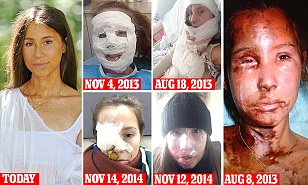
How doctors gave me my face (and my life) back: British teenager who was left horribly disfigured by a brutal acid attack in Zanzibar tells of her triumph over evil 70 operations later

18-year-old, from North London, had been volunteering at a school in Zanzibar

Five years on, the brave girl's recovery has been nothing short of miraculous 

The right side of her face and body were completely burnt by the acid attack

Her assailants, who used acid from a car battery, have never been identified

What started as the trip of a lifetime became the stuff of nightmares for Katie Gee in a single vicious moment.

The 18-year-old, from North London, had been volunteering at a school in Zanzibar when she and her friend Kirstie Trup were doused in acid in an unprovoked and now infamous attack by two men on a moped. The results were horrific.

Kirstie suffered burns to her arm, but it was Katie who bore the brunt. The right side of her face and body were completely burnt while her right ear was left shrivelled, black and useless.

Yet five years on, almost to the day, her recovery has been nothing short of miraculous, as our photographs attest.

And thanks to 70 operations – many of them gruelling 12-hour-long skin grafts – the dedicated care of medical staff and endless perseverance from Katie herself, her skin is almost completely smooth, the scars barely visible at all.

During the first three years after the attack, she had to wear a plastic face mask and full body compression suit for 23 hours a day and, last month, became the proud owner of a new right ear, masterfully sculpted from tissue from one of her ribs.

These details and more all form part of the extraordinary diary she shares today with The Mail on Sunday, charting her recovery from the day she arrived at the Chelsea and Westminster Hospital.

Today, the worst of her treatment is over, and the sociology student, who graduated from Nottingham University last year, wants to pay tribute to the extraordinary work of the Health Service – and to highlight the sheer destruction caused by a type of attack which is growing increasingly common, particularly in London.

Her assailants, who used acid from a car battery, have never been identified. 'In the first few years I barely went out,' Katie says. 'I had no confidence. People would stare and it makes you feel ugly and different, like a spectacle. I've come such a long way in five years.'

Friday, 3 August 2018

Blood test requiring just one drop to detect arthritis two years before any symptoms could become available in Britain by 2020

Currently 8.5million Brits suffer from osteoarthritis, with many late diagnoses

Late stage diagnoses can mean hip or knee replacement is the only option

Test detects protein glucosepane which is released when joints are damaged

A simple blood test for the most common form of arthritis costing under £200 could detect the condition two years before any symptoms.

The osteoarthritis test, which requires just a single drop of blood, is 98 per cent accurate and picks up a protein fragment released into the bloodstream by joint damage. It could be available for use within two years.

Currently 8.5million people in Britain suffer from osteoarthritis. Often it is diagnosed at such a late stage that a hip or knee replacement is the only option.

But the test could help people catch the condition early, so they could make changes such as losing weight or doing exercise to try to avoid debilitating symptoms later on. Osteoarthritis is caused by wear and tear of the cartilage which helps our joints cope with bending and lifting.


Women are dying for bigger butts: 33 patients have died on US surgical tables in just 5 years, top plastic surgeons reveal - as they call to change how Brazilian butt lifts are performed

One in every 3,000 people who have Brazilian butt lifts die after the surgery

That is twice as many as any other cosmetic procedure In the last eight years, at least 10 women died from butt lifts in Florida 

Experts across the world are warning patients that an fat injection made too deep could prove deadly

Women from across the globe are dying from complications of Brazilian butt lift operations, prompting an international task force of plastic surgeons to warn against the procedure.
Driven to fame (or infamy) by the likes ofKim Kardashian and Kylie Jenner, plastic surgeons performed 18,487 such 'butt lifts' in 2015. 

But the procedures comes with serious risks. 

For 30-year-old Lattia Baumeister, a butt lift was deadly. She died on the operating table in Florida, leaving her six children in Illinois motherless. 

She was one of least 33 people have died in the last five years in the US because fat transferred to their butts caused deadly embolisms, and a special task force is now warning surgeons that the way they learned to do the operation may be deadly.

A normal butt lift reduces the size of the butt. It is commonly used for formerly overweight people who lost weight.

However, a BBL increases the size of the butt, by adding grafted or injected fat.

It was created by Ivo Pitanguy, a pioneering Brazilian plastic surgeon, who died in August 2016 aged 90 after carrying the Olympic flame in Rio. 

HOW IT WORKS:

Liposuction to remove fat from abdomen/hips/thighsFat is 'processed'Fat is injected into buttocks

BBL STYLES:

Upside-down heart, or 'A-shape': Much smaller waist and larger buttocks towards the bottom

Round: emphasis on increasing the size of the butt, not pulling in the waist or thighs  

HOW TO PREPARE:

Don't smoke (increases infection risk and blood clot risk)Don't gain weight (when you lose it again, your butt will change)

RISK OF DEATH:

Higher than most operations - 20 in 100,000 compared with 1 in 100,000.

There are two major risk factors that can make a BBL fatal:

Blood clots travel to lungsAccidental injection of fat to blood vessel

RECOVERY:

Don't work for 10 days

Don't sit for 6 weeks

Sleep on stomach

Final shape will take months or a year to form

Thursday, 2 August 2018

Donor, 53, meets the patient who received her HEART: Seriously-ill woman agreed to donate her healthy organ to another person so she could get new lungs as part of the extremely rare 'domino procedure'

Linda Karr, 55, of Berkeley, California, had a degenerative heart condition that left her in need of a heart transplant

Tammy Griffin, 53, of Happy Valley, Oregon, had cystic fibrosis, which was causing to struggle to breathe and needed new lungs

Doctors at Stanford University Hospital in California approached them with the chance to participate in a rare, domino procedure 

Griffin would receive the heart and lungs from a deceased donor and Griffin's healthy heart would go to KarrJust six weeks after the procedure was performed, Griffin was able to meet Karr and hear her old heart beat inside her chest

Their meeting is now the subject of a new painting titled Tammy and Linda being unveiled on Friday 

Ebola returns to Congo: Four new cases declared just 9 days after the end of an outbreak which killed 33 people in the African country

Four people have been confirmed to have Ebola near Beni in the north-east

The infections are over 1,500 miles from the last outbreak which ended in July 

New outbreak must be contained in an active war zone near the Uganda border

Another Ebola outbreak has been declared in the Democratic Republic of Congo less than 10 days since the last one ended after killing 33 people

At least four people have tested positive for the deadly fever which causes people to haemorrhage blood and their organs to fail.

The latest cases have been found in and near a town called Mangina, about 62 miles (100km) from the border with Uganda in the country's north-east.

Experts from Congo's health ministry will arrive in the nearby city of Beni today, and the World Health Organisation has begun moving supplies to the area.

Some 20 people are reported to have died of haemorrhagic fever in the area already, the ministry said, but it did not say when that happened and it is not clear whether the deaths were linked to the new outbreak.

There are concerns if the outbreak spreads it will be near an active war zone in the region of North Kivu and in a place with close links to Rwanda and Uganda, increasing the risk of Ebola spreading across the border.

The outbreak is some 1,553 miles (2,500km) from where 33 people died of the haemorrhagic fever in the northwest of the country and is not thought to be linked.

Medical miracle as mother with TWO wombs becomes pregnant in both at the same time and gives birth to two babies in one-in-500million case

Finding out you're having twins is always a surprise.

But for Jennifer Ashwood, the news came with a twist when doctors discovered she had two wombs – and had become simultaneously pregnant in both.

The odds of the phenomenon are 500million to one, with fewer than a hundred examples ever recorded worldwide, and just a handful in Britain.

Most pregnant women with Mrs Ashwood's condition, known as a bicornuate uterus, carry one baby on one side. Indeed, Mrs Ashwood, 31, had daughter Millie, now eight, without finding out.

'I've had a baby before and it was really straightforward,' she said. 'But my body surprised me this time.

We found out at the 20-week scan and ever since people have been saying how rare it was.'

The twins came home after two weeks, following treatment for jaundice. 

She said: 'To have the two [wombs] is rare in itself, but to have an egg in both, then those to be fertilised, and then for both eggs to be in the right part ... it's a bit of a miracle. You think you know your body well, but it turns out you might not.

'Compared to my first pregnancy I was sick much, much more. Because it's so rare to carry a baby in each [womb], they didn't really quite know what was going to happen until they opened me up and took a look.

'It's very, very busy at home now,' she added. 'We haven't had much sleep but I don't think we'd be having much even if we just had one. It's double the cuddles and double the love.


Friday, 1 June 2018

6 Amazing Health Benefits Of 'Soursop' You Didn't Know

Soursop fruit, with its sweet flesh and distinctive flavor, is grown commercially to make juice, candy, sorbet and ice cream.
1. Anti-Cancer properties - There is a neurotoxin in soursop called annonacin which is can be classified as an acetogenin. Did you know that soursop can help inhibit the growth of cancer cells when compared with chemotherapy and Adriamycin. This is due to the presence of annonacin. If you haven’t been consuming soursop regularly, this is your time to do so. Cancer kills, save yourself.

2. Energy Booster - Fructose is a simple sugar that serves as a building block of complex carbohydrates. Sugar is a great energy booster with clear examples such as glucose. Soursop contains high amounts of fructose which serves as an excellent source of energy.

3. Boosts immune system - Naturally, aside eating to satisfy our hunger, we eat in order to gain the necessary neurotoxins that help fight against diseases. The fruit ‘aluguintuguin’ contains high amounts of gentisic acid, annocatacin, anonol, annocatalin, linoleic acid, annohexocin, gigantetronin, caclourine, annomuricin and anomurine. All of these are very important in boosting our immune systems while preventing disease causing organisms from operating.

4. Aids digestion - Aside it’s delicious taste, soursop is rich in dietary fibre which aids in the easy digestion of food. Indigestion and heartburns are very uncomfortable hence it is important to consume more fruits especially those with high levels of dietary fibre.

5. Aids in faster wound healing - Herbal medicine is gaining popularity in Africa especially for treating wounds. The soursop is a very important fruit because nearly all it’s parts are utilized. The stem and bark of the soursop plant can be used for preparing herbal medicines for treating wounds and cuts. Wounds treated with this kind of herbal medicine die fast and leaves minimal scars.

6. Helps to maintain a healthy heart - Vitamins B1 and B2 are very essential for facilitating blood circulation . In order for the heart to function properly, these vitamins are needed in right quantities. Soursop is rich in vitamins B1 and B2 therefore it is recommended for the elderly and those with heart conditions.

There are many fruits that are beneficial in many ways yet we only concentrate on their taste. It’s about time we treated these fruits with the importance they come with.

Thursday, 31 May 2018

Ebola: Airport authorities pick-up 95 percent of travellers with high fever in Abuja

The Federal Airports Authority of Nigeria yesterday announced that it had detected and picked up over 95 per cent of travellers who had high fever as they travelled through the Nnamdi Azikiwe International Airport, Abuja.

FAAN said this was in its bid to avoid the re-emergence of the dreaded Ebola virus in the country.

It also stated that in conjunction with other agencies of government at the airport, it had established a public health emergency contingency plan at the NAIA and other key international airports in the country in order to effectively guard against the disease.

The Head of Medical, FAAN, Dr. Adamu Adamu, disclosed this during a media tour of the Abuja airport, where hundreds of passengers and crew members on-board Emirates Airlines, including the Minister of State for Aviation, Senator Hadi Sirika, were screened with the thermal camera and hand temperature detector.

Adamu said, “In this airport, we have a public health emergency contingency plan that we developed in conjunction with the Port Health Services of the Ministry of Health and our partners, Pro-Health International. I am sure you are all aware of the outbreak of Ebola in Congo, which has moved from the rural areas, where it started, towards Kinshasa.

Because Kinshasa is a hub, it has become a serious concern and the world is probably in trouble. Right now, the World Health Organisation has not declared public health emergency of international concern over the case, but Nigeria has to be proactive because of our previous experience.

What we are doing is not an Ebola scan; we are scanning for high temperature fever so that when we discover any passenger with high temperature, we quickly take that person for proper checks. We don’t want to scare people, because there is no cause for alarm. We want people to come to us if they feel sick or if they suspect any one to be sick.

“We are looking at the temperature scan. We are also looking at the travel history of passengers. We have sanitisers that have been positioned in strategic areas so that passengers who are coming into Nigeria will have facilities to clean up their hands. I can assure you that over 95 per cent of people that come to this airport with high fever are detected and picked up.”

The Northern Regional Manager, FAAN, Sani Mahmud, stated that surveillance and screening for Ebola virus and other infectious diseases had not stopped in all Nigerian international airports since the virus first entered the country in 2014.

Tuesday, 29 May 2018

BENEFITS OF DATES.

What are Dates?

Dates belong to the palm family. It bears flowers and belongs to the flowering plant species. It has different name in different language, for example it is called Khajoor in Urdu and Hindi, Tawarikh in Arabic and Palmier in French and scientifically it is called Phoenix dactylifera. It is believed that Iraq is the origin of dates. Dates trees are available in different heights ranges from 10 feet to 120 feet.

Dates are very popular staple food for thousands of years in Middle East and also one of the main sources of income for the people of Middle East. In Ancient Egyptians date wine was very popular. Date tree is almost 50 million year old according to the fossil records. That was a short introduction of date; now let’s talk about the benefits of dates.

Benefits for constipation

According to the study, dates are very helpful for the treatment of constipation. The pulp of the date can aid in treating constipation. According to the research paper of University of Rochester Medical Centre, deficiency of fiber can cause constipation (Rochester).

All of us know that dates are rich source of fiber.   Eating 20 to 35 gram of fiber regularly can make our stool soft and prevent the constipation. Fiber regulates our bowl movement and contributes in stool formation. You should take dates regularly and limit the items which have no fiber or poor in fiber.

Benefits for Brain Health

Dates are full of potassium and have a very little amount of sodium which is very important to keeps our nervous system strong. Potassium keeps the cholesterol in control and reduces the risk of stroke (Musthafa Mohamed Essa, 2016). Dates are also very important to reduce stress and keep the mind free from stress. Dates are also very helpful to slow down the progress of Alzheimer’s (Subash S, 2015). Dates can also prevent inflammation in the brain.

Benefits for Weight gain

Although over weight is a serious issue for lot of people, but there is a huge amount of people who are under weight and wants to gain the weight. If you are too skinny and wants to put some pounds on you, then you should eat dates regularly. Dates are rich in sugar, proteins and vitamins which help us to gain weight. If you don’t want to gain and also want to enjoy dates, don’t worry eating dates with cucumber keeps our weight in normal position.

Benefits for Colon Cancer

Dates are very helpful for the growth of beneficial bacteria in the gut which reduces the growth of colon cancer (Reem A. Al-Alawi, 2017). For all age groups dates can work as a helpful tonic, and they are more useful than medicines in some cases. Dates have no side effects on human body because they are natural. But you should be careful while eating the dates, because poor packaging and badly processed dates could be harmful for us.

Benefits for Bones

Now a day’s Osteoporosis is a diseases in which bones become weaker. It is very common in old age people. Dates contain manganese, copper, selenium and magnesium which are very important for our bones. According to a report, dates also contain boron which is very healthy for bones (Nordstrom, 2014). So we should eat dates to prevent osteoporosis and make our bones strong.

Benefits for Anemia

Dates are full of iron which makes them perfect supplement for the patients of anemia. There are some anemia patients which inherent lack of iron, dates are perfect supplement to increase their energy level and decrease the feelings of tiredness.

Benefits for Skin

Dates contain vitamin C and D which keeps our skin smooth. Dates also have anti-aging benefits. So if you have skin problems, dates should be an essential part of your diet. Dates also prevent the accumulation of melanin in our body. We all know that hormones play a key role in our appearance. Dates can be useful to improve our skin appearance and remove wrinkles (Bauza E, 2002).

Benefits for Inflammation

According to the report of online library, dates are very rich in components which fight against inflammation (Safia Ali Haimuod, 2016). Magnesium is very important for our immune system. Dates are very important source of magnesium which makes our immune system strong enough to prevent inflammation. So dates should be in tour diet if you are suffering from inflammation.

Benefits for Healthy Pregnancy

Are the dates helpful during pregnancy? Yes dates are very helpful for pregnant women through their calories. Pregnant women have to take 300 calories more than non pregnant women.  Dates are very rich in nutrients. Fiber prevents pregnancy hemorrhoids, and we have discussed above dates are full of fiber.

So keep in mind all these benefits of Dates and make them essential part of your diet and stay healthy.

Sunday, 27 May 2018

Codeine abuse : Lagos blame rise on neglect of mental health

Establishes Biosafety lab . increases PLWH on treatement to 67,763

As battle against  drug abuse rages, Lagos State Government has blamed the misuse of codeine containing cough syrup  on the neglect of mental health sector in the country.

*Experts say codeine syrup is used in treatment of cough, but when abused could lead to full-fledged addiction that is potentially deadly.

The state government reaction came days after Federal Government banned issuance of permits for importation of codeine as an active pharmaceutical ingredient for cough preparations.

Lagos State Commissioner for Health Dr. Jide Idris who spoke on activities embarked upon by the ministry in last one year, said: “The abuse on Codeine drug and others further show extent of mental situation in the country. And that is why we have decided to place emphasis on mental health.

It is a serious issue. It is one aspect of health sector that people didn’t generally address.” Idris hinted that the state government has concluded plans to embark on an aggressive programme to curtail the use of drugs in Lagos.
“We are not looking at Codeine alone. We are looking at it under drug abuse. Codeine is just one substance of the various drugs currently being abused in the country.”

“To this end, we have updated our own mental health law as against what is happening across the country.
We are ensuring that we improve the mental health law to cover the three tiers in the sector. The revelation on Codeine is a tip of the iceberg.”

Continuing,  Idris hinted that no fewer than 67, 763 persons were currently undergoing Human Immunodeficiency Virus (HIV) treatment care in the state as against 64, 554 that were on treatment barely one year ago. Idris added that the state has been able to scale up Anti Retro Viral Therapy from 44 sites to 65 sites, adding that they also upgraded 10 per cent of its Prevention of Mother to Child Transmission (PMTCT) sites with optimization of services from Option B to Option B+.

He said:, The program has been able to place and retain 67,763 HIV positive persons on treatment care and support across the state out of which 1,989 persons are on treatment in three  Global Fund supported LGAs (Ikorodu, Oshodi-Isolo, and Epe) as at December 2017.
“The above achievement has earned the State GF supported HIV Control program an extension period of implementation of eighteen (18) months.

‘’The programme  had been able to counsel, test and give results to 1,125,939 persons.
Due to this, the State has scaled up Provider-Initiated Testing and Counseling (PITC), Option B+ for pregnant women and test and start strategies in government tertiary, secondary and primary health facilities.’’

On the biosafety Laboratory (BSL3), he explained  that the Lagos State Government through the Ministry of Health and in collaboration with the Global Partnership Programme (GPP) Canada is establishing a Bio-containment and Bio-Safety Laboratory within the premises of the Lagos Mainland Hospital, Yaba Lagos.
Idris said the establishment  of the lab was a fall-out of the successful containment of the Ebola outbreak of 2004.

“The facility would afford the State the opportunity to promptly diagnose diseases of public health importance during routine surveillance activities and during outbreaks of emerging highly pathogenic infectious diseases or incidents of environmental toxicity towards effective clinical management.

In addition, bio-samples would be stored in the biobank section of the BSL laboratory for medical research and international collaboration to fast track research and discovery.


Lagos doctors reject appointment of non-medical practitioner as consultant

Medical doctors working for Lagos State Government, yesterday, rejected appointment of a non- medical and dental doctor as consultant in the hospital setting, even as they appealed to authorities of the state to ensure that all healthcare facilities in the state were not closed for doctors to provide care for patients.

At a briefing in Lagos on the platform of Medical Guild, the doctors  called for the immediate withdrawal of the circular announcing the appointment.

According to Chairman of the Guild, Dr. Babajide Saheed, such appointment in the hospital setting would lead to anarchy in the health system. He said: “Such a system will adversely affect patients care, and will prevent delivery of qualitative healthcare to the citizens of Lagos State.
“The Guild is not against any cadre of staff attaining any grade level commensurate with his or her qualifications within the ambient of the public service rule.”
Saheed argued that the appointment of a non-medical/dental doctor to the position of Permanent Secretary in Lagos State Health Service Commission should be in line with the statutes laid down in the state’s Health Sector Reform Law, 2016.

Menstrual education essential for developing a confident girl – NGO


Princesses Attaining Defining Stages (PADS), an NGO, on Sunday said proper menstrual education and hygiene were essential to boost the confidence of female child in contributing positively to the society.

Girls often miss school during their menstrual periods .

PADS Founder, Temitope Udom, said this in an interview in Lagos in commemoration of the Global Menstrual Hygiene Day, which holds May 28.

According to her, most young girls who were not educated about the physiological changes that occur upon reaching puberty get embarrassed and lo se self-esteem during the menstrual flow. “Education about menstruation changes everything. A girl should be able to wear a sanitary pad to school with the conviction that she would not stain herself and feel embarrassed.

“Schools and government should regularly include menstrual hygiene education in any health programme organised in communities or the larger society as a whole,’’ she said. Udom said that menstrual education was necessary because of cultural, religious and traditional beliefs that could lead to restrictions that women and girls face during their period. “For example, in some countries, girls and women face restrictive taboos relative to menstruation, such as being denied entry to places of worship and the kitchen.

“Some countries perceive menstruation as a disease and not a normal biological process, therefore, women who are menstruating are not allowed to sleep on beds or even touch male members of their family,” she said. Udom said that issues surrounding the menstrual cycle led to the birth of PADS, an initiative to provide girls with proper menstrual hygiene materials. The founder said the project aimed to be a voice for menstrual hygiene for Nigeria and Africa beyond, ensuring increased access for girls to properly use menstrual hygiene materials.

“The project started as a community service in conjunction with three of my friends while doing their National Youth Service Corps (NYSC) in Calabar, Cross River in 2017. “We were able to get sponsors from private organisations and well-meaning Nigerians to provide sanitary towels worth over N150, 000 to be distributed in three schools,” she said. She said that several factors such as ignorance and lack of access to proper menstrual hygiene materials needed to be addressed to prevent diseases such as Reproductive Tract Infections (RTI).
Udom also said that a common factor militating against proper menstrual hygiene in schools was lack of adequate toilet facilities and the availability of clean water, especially in public schools. She, therefore, appealed to government at all levels to look into refurbishing toilet facilities of public schools and making arrangements for provision of clean water.
“Another way the government can help improve menstrual hygiene is by removing sales tax on feminine hygiene products and regularly distributing free menstrual pads in schools,” she said.

Udom called on corporate organisations and well-meaning citizens to support the Global Menstrual Hygiene Day by providing menstrual materials through Non-Governmental Organisations to the less privileged.

“It is a day where menstrual pads can be distributed in schools, hospitals, on the streets and even in the slums of the society,” she said. NAN reports that May 28 has symbolic meaning for the Global Menstrual Hygiene Day.
May is the 5th month of the year and women menstruate an average of five days every month while the menstrual cycle averages 28 days. (NAN)

Wednesday, 23 May 2018

Succour as women, others in Obalende receive free medical aid from church

Residents of Obalende and its environs can now easily access free medical check ups as well as health care services within their location as Guiding Light Assembly, GLA, under the leadership of Senior Pastor Wale Adefarasin, takes medical outreach to their doorsteps. The different locations include the mammy market, Obalende Local Government, Obalende Taxi park among others.

The medical outreach which takes place fortnightly has evolved from seeing very acutely ill patients to those with less life-threatening cases, most of whom are market women.
Speaking on the outreach, GLA Medical Team leader, Dr. Ernest Ekong said the church is committed to bringing good health to the underprivileged in Lagos using Obalende as a platform to reach as many people in the state as possible.
” I willingly bought into the vision and accepted to lead the team. Honestly, it is rewarding to serve God through the people,” Dr. Ekong said. According to him, without good health and sound mind, the nation stands the risk of under-development and stagnation since her citizens lack basic health provisions.
Nigeria is not immune to what is happening in the world, thus the nation also experiences shortfalls especially in the area of healthcare provision which has opened doors for individual organisations to contribute their quota to public healthcare.
Ekong explained that the free medical care focuses on health education on causes and prevention of communicable and childhood diseases like tuberculosis, hypertension, diabetes, infectious diseases, measles, tetanus, whooping cough, among others. According to him:
“Medical examination and dispensing of routine drugs including multivitamins, vitamin B complex, iron tablets, paracetamol, glucose, among others. “We treat specific illnesses like malaria, pneumonia, chest infections, cough, hypertension, diarrhoea, asthma, fungal infections,” he said. He said there is a referrals section on diabetes, tuberculosis, suspected HIV/AIDS cases and other sexually transmitted infections, surgical cases like hernia and appendicitis, incision and drainage for boils. “We also provide care for gynecological cases; disease prevention strategies, psychological counselling and advice on smoking, weight loss and healthful living.
“The majority of our team members are not even health care workers, but volunteers whom we have trained to be able to take blood pressure and pulse, know the drug group and can pack in dispensing envelopes and give to patients depending on the prescription by the few doctors, nurses and pharmacists among us,” he said. On the cost of the medical intervention to the church, Dr Ekong disclosed that the average cost is N1.5million per year. “It costs us about N1.5 million annually to run the project. When you put this together since 2006, you can imagine how much has gone into this project,” he explained. On churches establishing medical centres, Dr Ekong believe that setting up a hospital by a church organisation is not out of place and should be encouraged where possible.
“Healthcare should be part of the mission of the church just like the missionaries of old did. It is not just for the church to pray and hope for healing. I believe that faith should go with works. It is God that gives the medical doctors and other health care providers the knowledge to treat the people,” he stated.

"Must watch video" Benefits of Soursop

Practitioners of herbal medicine use soursop fruit and graviola tree leaves to treat stomach ailments, fever, parasitic infections, hypert...